
Biography
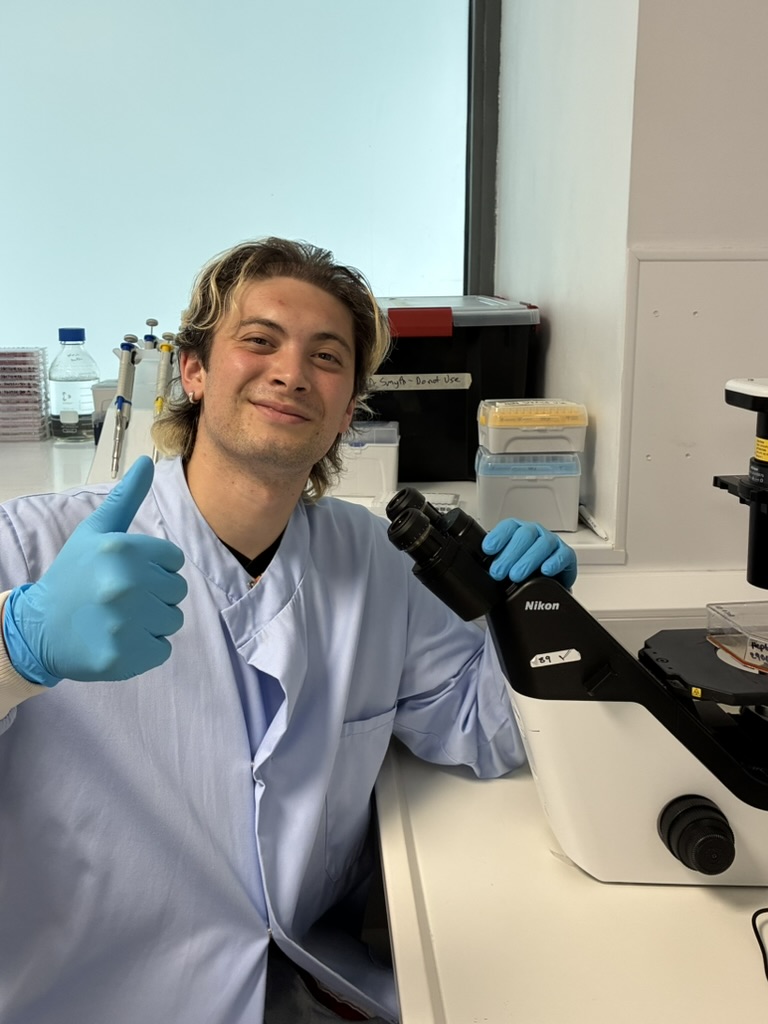
I am a PhD researcher in Biomedical Sciences at the University of West London, where my research focuses on immunoengineering strategies to improve regenerative therapies for liver disease. Working at the interface of regenerative medicine and translational healthcare, I investigate how engineering immune regulation can improve graft survival, reduce inflammatory rejection, and accelerate the development of clinically applicable cell-based therapies.
My academic training spans molecular biology, immunology, tissue engineering, and regenerative medicine. I completed an MRes in Tissue Engineering and Innovative Technology at King’s College London, building upon my BSc experience in mechanotransduction at the University of Glasgow. Throughout my training, I have developed expertise in advanced cell culture, molecular biology, immunology, tissue engineering, and translational research.
My research is driven by the belief that healthcare innovation should be both scientifically transformative and broadly accessible. By integrating immunology with regenerative medicine, I aim to develop therapies that are not only biologically effective but also expandable, clinically translatable, and capable of expanding access to advanced treatments. Ultimately, I hope my work contributes to a future in which immune-engineered cell therapies become practical alternatives to donor organ transplantation, helping shift regenerative medicine from a model constrained by organ scarcity towards one enabled by scalable, personalised cellular therapies.
Qualifications
- PhD in Biomedical Sciences, University of West London, London, United Kingdom (Ongoing)
- MRes Tissue Engineering and Innovative Technology, King’s College London, London, United Kingdom (2025)
- BSc Molecular and Cellular Biology (And Biotechnology) With Honours, University of Glasgow, Glasgow, United Kingdom (2023)
Supervisors
Dr Fang Xiao, Professor Hanieh Khalili
Research Projects
- Immunoregulatory Engineering of Regenerative Liver Organoids Using Tolerogenic Dendritic Cells.
Liver transplantation remains the only curative treatment for end-stage liver disease, yet donor organ shortages and immune-mediated graft failure continue to limit patient access. My research investigates how the immune system can be engineered to improve the survival and function of transplanted hepatocytes and bioengineered liver tissues.
The project explores the use of tolerogenic dendritic cells and advanced in vitro liver models to regulate immune responses following transplantation. By understanding and manipulating the cellular interactions that govern inflammation, immune tolerance, and tissue integration, this work aims to develop novel strategies that enhance graft persistence while reducing the need for long-term immunosuppression.
Beyond liver regeneration, this research contributes to the emerging field of immunoregulatory engineering, where immune cells are programmed to support tissue repair and regenerative therapies. The long-term vision is to enable regenerative medicine to transition from dependence on histocompatible donor organs towards scalable, off-the-shelf cell therapies that are accessible to a greater number of patients.
Research Interests
- Regenerative Medicine
- Translational Medicine
- Translational Healthcare
- Liver Regeneration
- Immunoengineering
- Tolerogenic Dendritic Cells
- Cell Therapy
- Liver Organoids
- Tissue Engineering
- Advanced 3D Cell Culture
- Molecular Immunology
- Biomaterials
- Cell–Cell Communication
- Precision Medicine