

AI in Echocardiography
This theme brings together the UNITY research programme and the Echocardiography AI Ecosystem, a growing set of data, models and applications. Together they aim to carry AI in echocardiography from research towards clinical use.
Research
UNITY research programme
UNITY is a UK research consortium integrating AI into echocardiography. Its open, AI-powered tools aim to standardise, accelerate and democratise echocardiography across clinical and global settings.
Funder. UNITY is funded by the British Heart Foundation through Programme Grant RG/F/22/110059, titled UNITY: UK Collaborative for integrating AI into echocardiography.
Partners.
- British Society of Echocardiography (BSE)
- National Heart and Lung Institute (NHLI), Imperial College London
- University of West London (THRIVE Centre)
- 11 hospitals across the UK
Its individual research studies are described on the UNITY page. Other studies, including independently funded projects and PhD research, also sit within this theme.
Echocardiography AI Ecosystem
Ecosystem of resources and applications
The Echocardiography AI Ecosystem is a growing set of data, models and applications for echocardiography. It is built to last beyond any single funding cycle, and it carries research from data and models towards use in practice. UNITY and other research in this theme draw on it, and feed back into it.
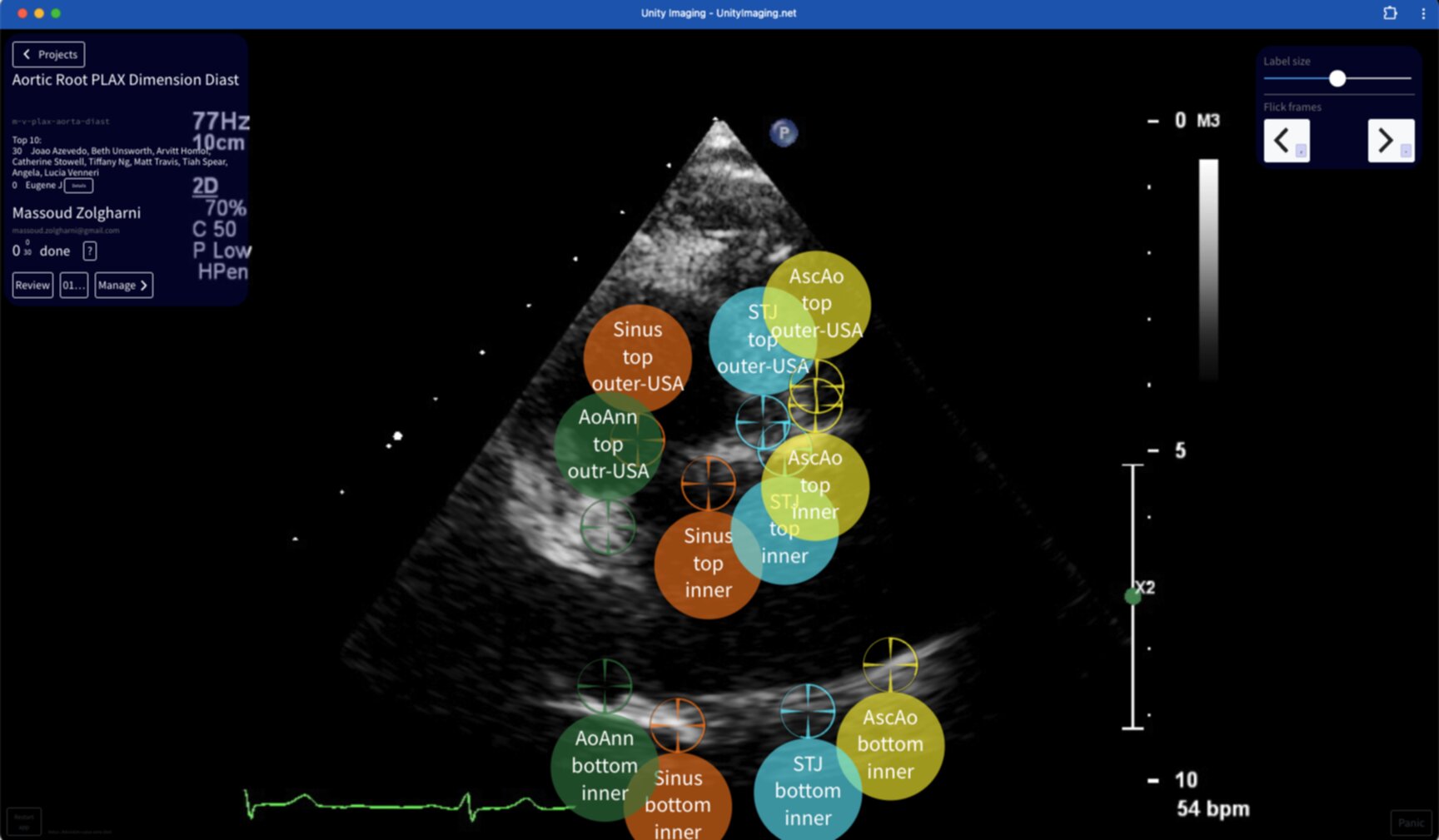
Biobank
Data and expert annotations for echocardiography research.
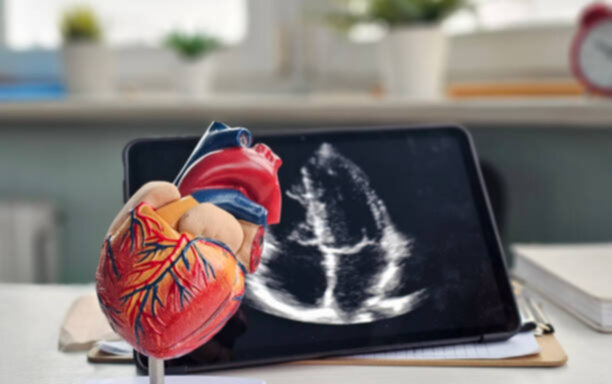
ScanNote
Annotation platform for medical imaging. Coming soon.

EchoForge
Open-source AI models for echocardiographic image analysis.
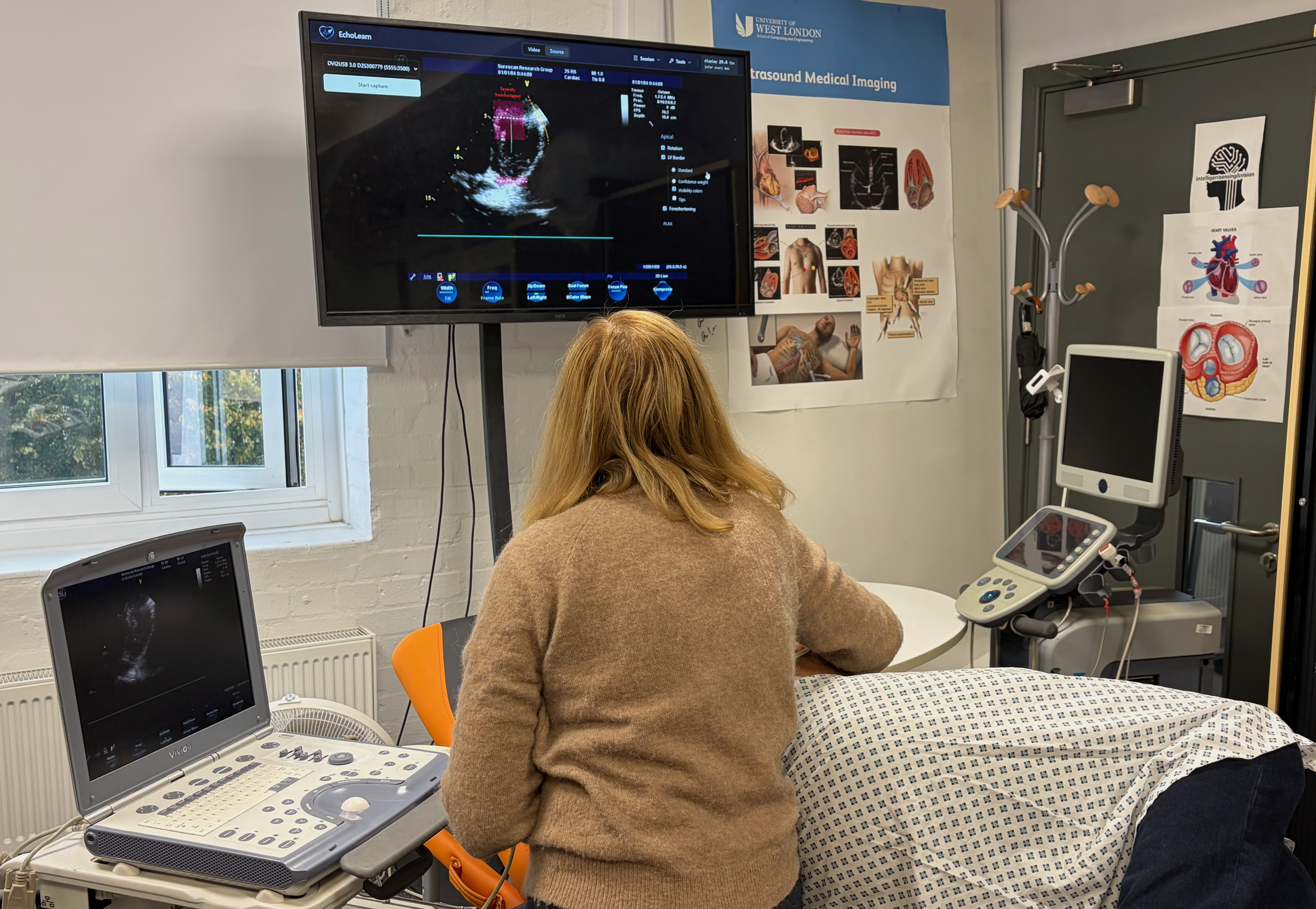
EchoLearn
Real-time guidance for echocardiographic image acquisition and training, now in supervised clinical evaluation.
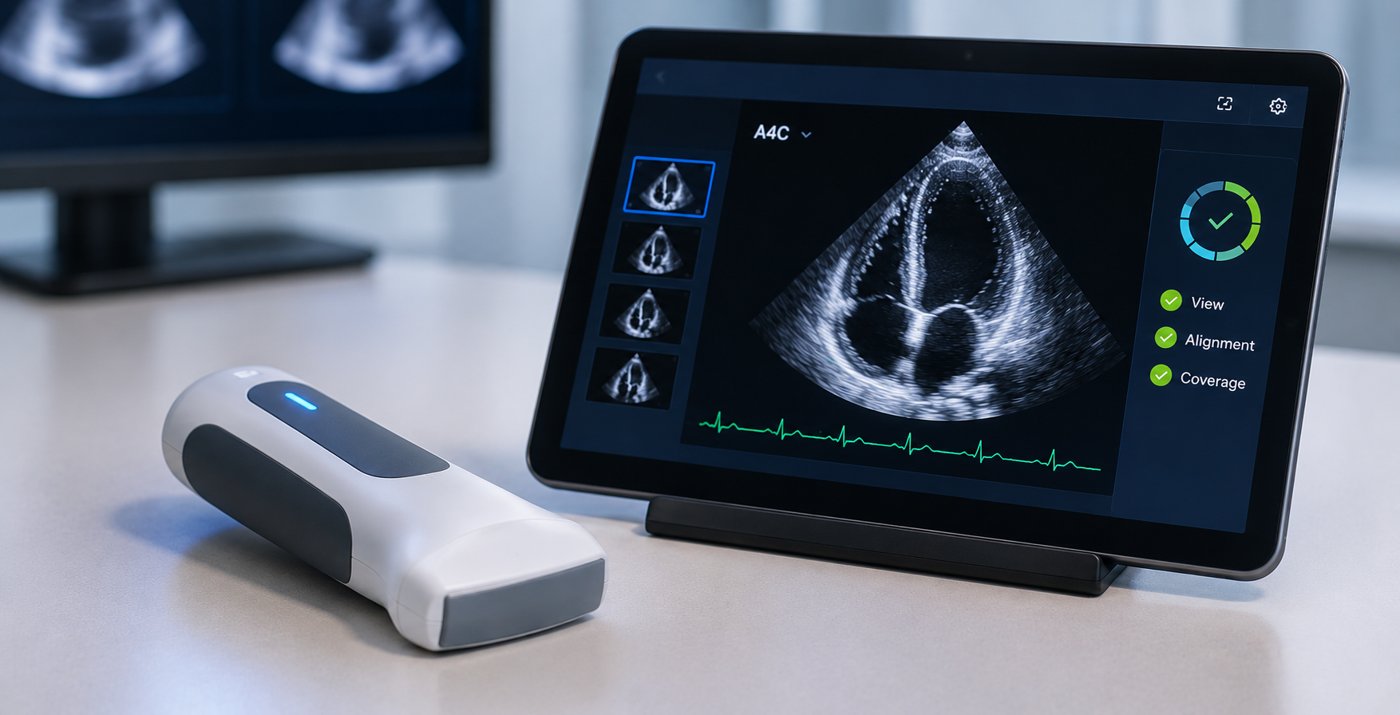
EchoCruise
Early-stage research on AI-assisted ultrasound examination.
How it fits together
From data to applications
Expert-annotated data supports the research. The research produces methods and models, shared through EchoForge. EchoLearn applies image-quality assessment to live acquisition guidance, and EchoCruise explores how AI could support the wider ultrasound examination.